
Integration is the reverse process of differentiation. While differentiation deals with the rate of change, integration deals with accumulation — such as finding area under curves, total distance, volume, and surface area.
1. Riemann Integral
The Riemann integral defines integration as the limit of sums of areas of rectangles under a curve.
If a function  is continuous on
 ![[a, b]](https://bcaguidenepal.com/wp-content/ql-cache/quicklatex.com-b28ebca9266518f1a778b4a4b102a2e1_l3.png "Rendered by QuickLaTeX.com") , then:
, then:

where  .
.
2. Fundamental Theorem of Calculus (Without Proof)
Connects differentiation and integration:
If  is an antiderivative of , then:

Differentiation and integration are inverse processes.
3. Techniques of Integration
Basic Rules


Standard Integrals





Substitution Method
If  , then:

Integration by Parts

Partial Fractions
Used for rational functions.
4. Definite and Improper Integrals
- Definite Integral:

- Improper Integrals: Extend to infinity or discontinuous functions.
Example:

5. Applications of Definite Integrals
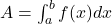
- Area under Curve:
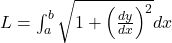
- Length of Arc (Rectification):
- Volume of Solid of Revolution:
Rotating curve around x-axis:
 ![V = \pi \int_a^b [f(x)]^2 dx](https://bcaguidenepal.com/wp-content/ql-cache/quicklatex.com-b750e5658a899611dac4a6cedbb0a6b3_l3.png "Rendered by QuickLaTeX.com")
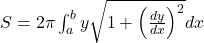
- Surface Area of Revolution:
6. Numerical Integration
Used when exact integration is difficult:
Trapezoidal Rule
![\int_a^b f(x) dx \approx \frac{h}{2} \left[ f(x_0) + 2\sum_{i=1}^{n-1} f(x_i) + f(x_n) \right]](https://bcaguidenepal.com/wp-content/ql-cache/quicklatex.com-047c404e16a2dcf615158a4a83e2fb25_l3.png "Rendered by QuickLaTeX.com")
Simpson’s Rule
![\int_a^b f(x) dx \approx \frac{h}{3} \left[ f(x_0) + 4\sum_{i=1,3,5,\dots}^{n-1} f(x_i) + 2\sum_{i=2,4,6,\dots}^{n-2} f(x_i) + f(x_n) \right]](https://bcaguidenepal.com/wp-content/ql-cache/quicklatex.com-f7d5869e754fc79e1027e3b1f90ab8d0_l3.png "Rendered by QuickLaTeX.com")
7. Worked Examples
- Find:
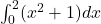
![= \left[ \frac{x^3}{3} + x \right]_0^2 = \frac{8}{3} + 2 = \frac{14}{3}](https://bcaguidenepal.com/wp-content/ql-cache/quicklatex.com-f08b5b660574f85566a27e3aa030e805_l3.png "Rendered by QuickLaTeX.com")
Area under curve  from 0 to 1:

Volume of solid when  , from 0 to 4, rotated around x-axis:
![V = \pi \int_0^4 x dx = \pi \left[ \frac{x^2}{2} \right]_0^4 = 8\pi](https://bcaguidenepal.com/wp-content/ql-cache/quicklatex.com-f753e0dcdddbd128449d32a9f2b1d08c_l3.png "Rendered by QuickLaTeX.com")
Key Takeaways
- Integration is the reverse of differentiation → used to accumulate quantities.
- Fundamental theorem links definite integrals to antiderivatives.
- Techniques include: substitution, integration by parts, and partial fractions.
- Applications: area, volume, arc length, and surface area.
- Numerical methods (Trapezoidal & Simpson’s rule) approximate integrals.
- Improper integrals extend integration to infinity or discontinuities.